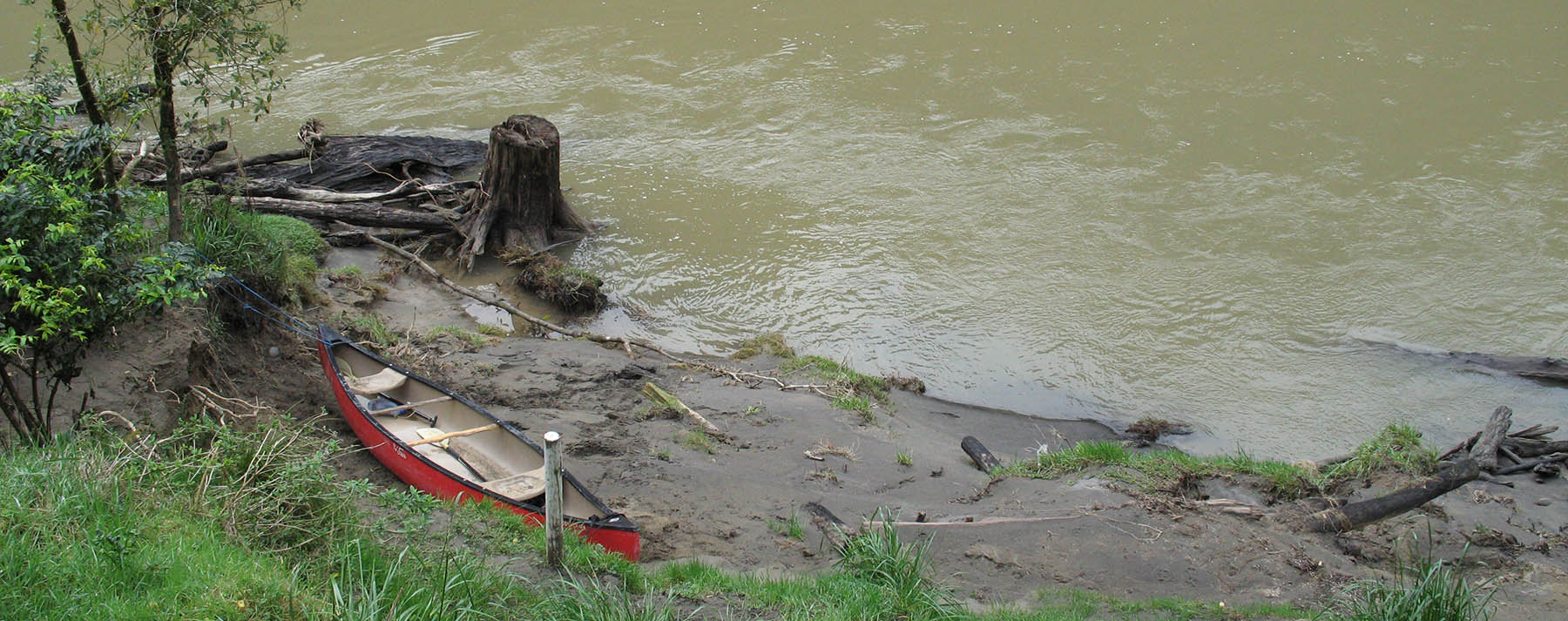
Whanganui Canoe Trip
From the 10th until the 14th of September, we were in National Park Village in Tongariro National Park. It rained daily, so our plans to walk around the park and the mountains were put on hold or delayed. We had previously decided to do the final “Great Walk” of our trip: a 3-day canoe trip down the Whanganui River. Neither Fem nor I had experience canoeing, and we were concerned that the previous days of rain would affect the river levels.
Day 1 – The Canoe Trip
On the 14th, the weather forecast showed a break in the rain for about three days, so we thought it was now or never. We travelled to a canoeing company and set off to the insertion point, which was a hut named Whakahoro. Fem kept telling the owner we had no experience and that he should let us know if the river was safe to travel down. We would respect his decision either way. He assured us he had 18 years of experience on the river and would make the final call on whether we should go.
When we got to Whakahoro, he checked out the river and said we were ok to go. He mentioned that the current was flowing faster than normal, but it would help us go down and cut our 6-hour travel time to 4 hours. I was pleased that I would mainly only have to steer and not worry too much about paddling. He said that if we did tip out, to get the canoe to shallow water, tip the water out and then open one of the barrels to change into warm, dry clothes. Since we only had one set of warm clothes, I was unsure if I would do that last part if it came to it! He also mentioned that our centre of gravity would be much higher because we were both much taller. Therefore, we just needed to be careful when balancing the canoe.
We stored our possessions in six 30L watertight barrels. I put my things in three blue barrels, and three black ones held Fem’s gear. The owner tied the barrels in a two-by-three pattern with a blue rope across the 2 person Canadian canoe. He also put in a ten-metre black rope that we could use with one end tied to the front of the canoe. We had our two 3L CamelBaks, which held our water supply. Fem put hers in the bottom of the canoe. I tied mine to a canoe cross beam (shown in the photo below). We didn’t have wetsuits, so I wore my swimming trunks with a regular pair of shorts over the top for warmth. I wore two T-shirts and my raincoat. Fem was similar but with long quick-drying pants and thermal pants. We both wore Teva sandals.
The owner and his assistant helped us into the canoes, and away we went. The sides sank slightly lower than expected, with both of us in the canoe. While I felt pretty ok, Fem was instantly concerned with how unstable it seemed.
For the first hour, things were well. Our progress was good, and we thought we had reasonable control of the canoe. I sensed my legs were getting tired from keeping the back end balanced. Fem had to shout to tell me where she wanted to go. She was sitting in front of me, and with my hearing aids out, she was hard to hear. We saw plenty of wild goats on the sides, and the scenery was good. The water was very murky, and you could not see through it. Our pace was good, about jogging speed, based on how fast we were passing the land.
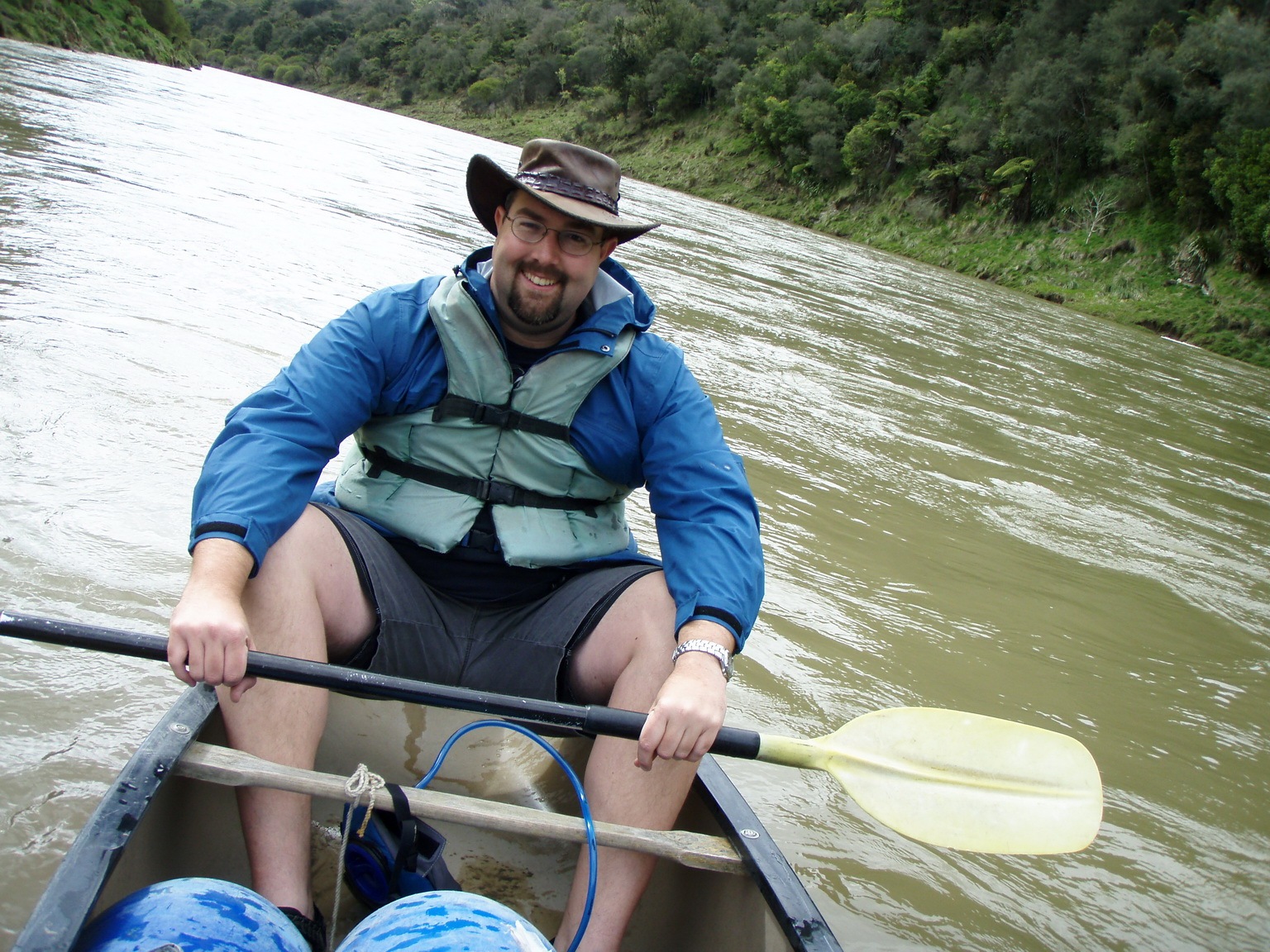
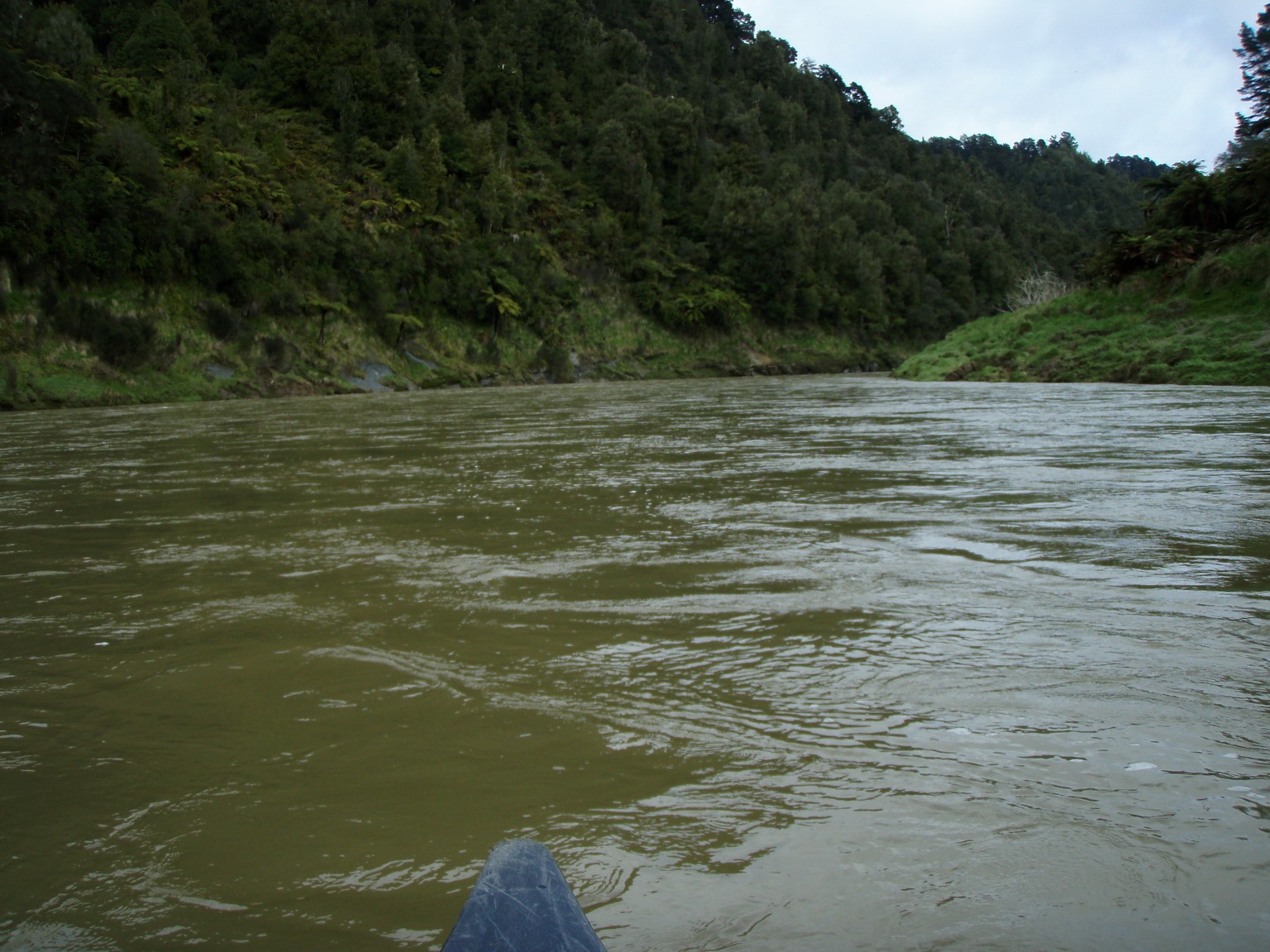
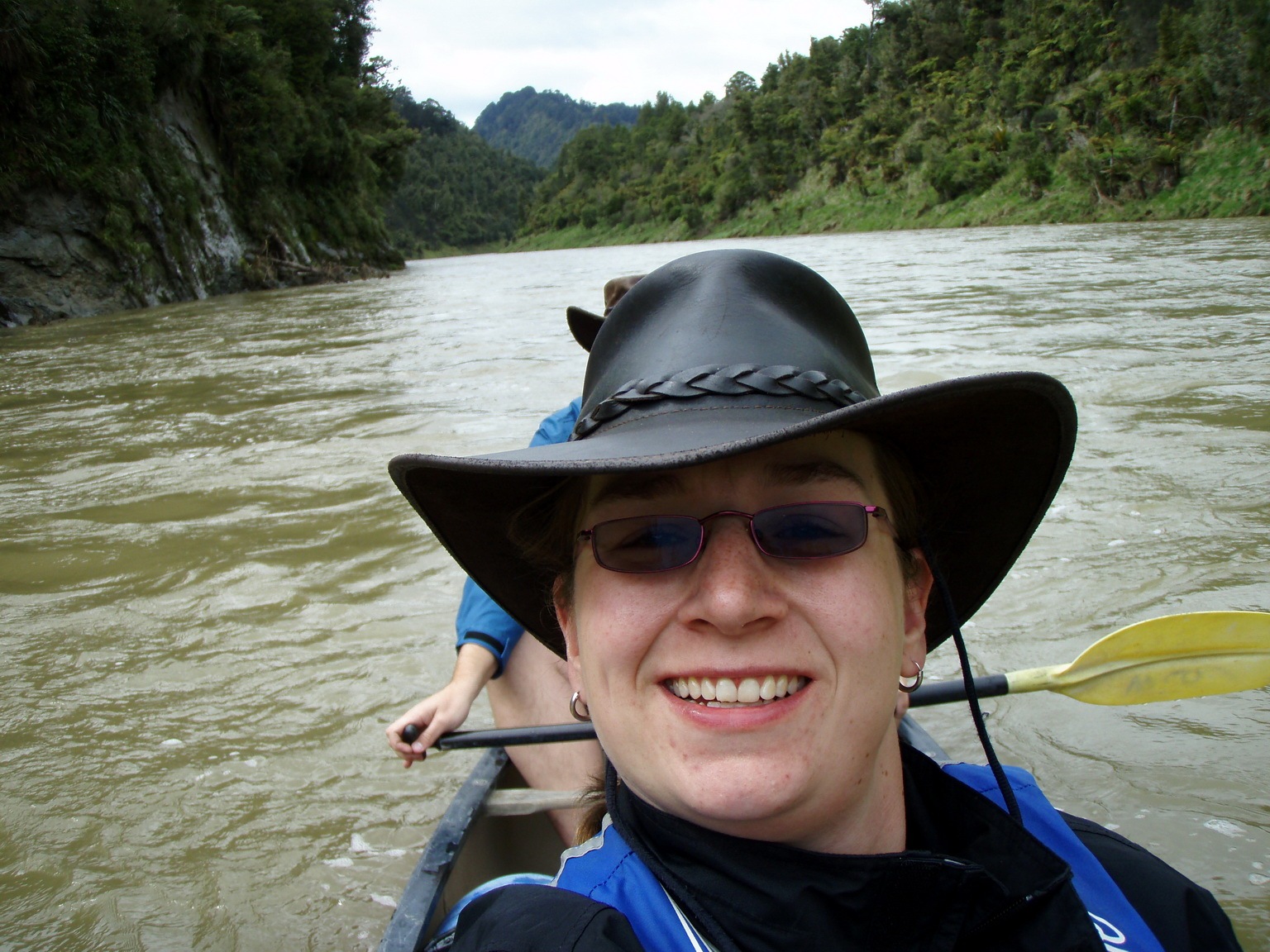
We passed the first campsite named Mangapapa. Then just over 1 hour into the trip, we came around a bend in the river. There did appear to be two river currents merging. We came across one and turned to line up with the other, but we came in at an awkward angle. This angle caused the canoe to rock from side to side. Despite us both desperately trying to keep it level and the rocking under control, the canoe tipped over.
The first thing that got me was how cold the water was. My lungs seemed to collapse in shock. My breath came out in short, sudden gasps, plus the shock of us having overturned. I looked across to Fem to see she was experiencing the same thing. Neither of us could touch the bottom, so we could only move around the upturned canoe and try to manoeuvre it down the river.
I tried to make light of the situation. “Ah well, we went over. Let’s get this back up and get going!”
One thing I saw once I got over the shock was Fem’s camelback floating away down the river. I wasn’t too concerned, since we had more important things to worry about.
Remembering the owners’ advice, we tried to get the overturned canoe to the riverbank. However, the current was too strong. Each time we kicked ourselves over while dragging the canoe and got close to shore, the current would pull us back into the river. Judging by our speed relative to the shoreline, I estimated the current was still about the speed of an average person jogging. It was definitely faster than walking speed.
After trying this about four times, I was concerned. A lot of the shoreline on both sides of the river was just steep cliffs with no possibility of putting the canoe on land. Other landing sites were on the other side of the river, or we were passing by too fast to access. I was always pleased with the “powerful” kick I could do in the swimming pool, but this current was just way too strong. Dragging an upturned canoe was like a dead weight in the water. We could not get it to land or even just shallow water.
After discussing it with Fem, we thought we should try tipping the canoe over in the water and getting back into it. But when you cannot touch the bottom, as the canoe flips, it scoops up a lot of water as it turns over, which sends either the head or the tail under the surface.
Around this time, the ropes holding the barrels somehow came undone. Three of the barrels started floating away from us. Fem grabbed one and hung on to it. Fem yelled out for me to get the barrels. I could not get to the other two barrels in time, and they floated out of reach.
“Man… what next….” I thought.
Fem also got her legs tangled in the big, long black rope. It’s unnerving to feel this rope wrap around your legs in murky water you cannot see.
Fem also briefly separated from the canoe. She had to let go of the barrel to be able to swim to the canoe. She yelled out, and I moved around to the back of the upturned canoe, and with her extending out her oar, I could grab it and pull her close to the canoe again. We needed at least one hand on the canoe to stay connected with it the whole time.
We tried to turn over the canoe again and again. But each time, it scooped up too much water, and we could do nothing but roll it back over again.
At about this time, the barrels that had floated away came back to us. I grabbed onto them and asked Fem for some rope. She got the black rope and slowly began to find the end of it. The cold water was making our hands and fingers numb. It was getting difficult to do detailed tasks with our fingers. Her camelback was also floating nearby as she was finding the end of the rope. I quickly grabbed it and clipped it onto one of the handles of a nearby barrel. After Fem found the end of the very long rope, she gave it to me, and I tied the barrels to it. We had all our equipment again. Things were starting to look up.
Then we got stuck in a small, shallow whirlpool, which meant we were moving slower but going around in a big, lazy circle. We tried to take advantage of the slower speed to get to the shoreline again, but at this spot, there were mainly steep cliffs, and the current just pulled us away again when we thought we had almost gotten there. After going around twice, we realised where we might get stuck, so we kicked free into the main current, which pushed us downriver again.
The cold of the water was starting to get to us. Both of our bodies were numb. The only thing keeping us warm was our constant effort to get the canoe to move toward the shoreline or turn over.
I got the idea to put the barrels under the upturned canoe and try to flip the whole thing over. Since the barrels were buoyant, they should push up the canoe as it turns, so it should scoop up less water.
We tried this about 2 or 3 times and then finally success! We were able to turn the canoe over, and while it was mostly full of water, it did not sink.
I got my legs tangled in that damn black rope and had to kick and untangle myself free. This happened to Fem often and to me a few times.
With me on one side and Fem on the other to keep it balanced, I started emptying the water using a 2-litre milk bottle with the end cut off. We did have 2 of them, but only one was tied to the canoe. We lost the second one the moment we turned over and never saw it again.
Hanging onto the side of the canoe, it was a painfully slow process to empty the water 1 litre at a time. My arms were getting a little sore, but they were also very numb from the cold, so I just kept going.
Early in the process, I was able to touch the bottom. I could feel lots of loose medium-sized pebbles. We were about waist-deep in the middle of the river. We tried to stand up while holding on to the back of the canoe. We found ourselves getting dragged over the pebbles by the bottoms of my feet. I recall thinking, “Wow. These Tevas are awesome!” We were able to slow down, but at the same time, we were creating a huge wake with our presence. I felt the water from the current rushing past us, was surprised at how loud the roar was and realised this was not going to work. So we gave up and continued down the river.
Around this time, we passed signs for the second camp spot, Ohauora. We were surprised to see practically no landing bay at Ohauora. It made it very, very easy to miss it and drift on past. If you were in a canoe, it would have been impossible to back-paddle to make it back. Ohauora was the halfway mark of our trip. I knew we needed to get back into our canoe before we risked sailing past our hut, which was next.
After about 20 minutes of emptying the canoe, it was high in the river, with the two of us clinging to the sides as we still continued down the swollen river. I yelled out to Fem to get into the canoe. She was losing her strength fast and had trouble pulling herself in. With both of us unable to touch the bottom, it was tough to get in. She asked me to get in first. With great difficulty, I pulled myself up and managed to get in the canoe. Ahh, it was so great to get out of the water! My body started to warm up straight away as there was still a bit of sunlight left.
However, with me in the back of the canoe, it raised the front even more. Fem asked me to try and paddle over to the side for a hopefully shallow spot to make it easier for her to get in. I couldn’t control the canoe well with her in the water and holding onto the side.
I urged Fem again to try and get into the canoe. With me holding the other side for stability, Fem tried and tried to get in. Unfortunately, the efforts destabilised the canoe too much, and it toppled over again.
The cold water rushed over me again as I fell in, and it seemed even colder now. Fem was starting to shiver in the water. I could see her lower lip trembling with a combination of fear and the cold water. I was very cold too and was shivering a bit. I was quiet for a while, not really sure what to make of it all.
“What are we going to do, Matt?”
“I dunno. I am thinking…”
I was running out of ideas fast. I knew we had to get out of the water fast. I didn’t know how long we had been in there. We tried to turn the canoe over using the barrels under it repeatedly, but it didn’t work like before. I checked the barrels and noticed one of the blue ones had sprung a significant leak. It was no longer buoyant; since it was heavy and barely above the surface, it hindered the turnover process. I knew it was one of my barrels, but I untied that barrel and set it loose with almost no hesitation.
“Jeez, I really bloody hope that’s not the one with my hearing aids and camera and wallet…” I thought to myself as it sailed away, barely visible.
With the dead weight gone, we were having more success. But I still couldn’t get the canoe over successfully.
Fem was getting colder and colder. I was feeling numb and was shivering as well. She started to yawn, and I was concerned if it was a sign of early hypothermia.
Fem said, “Matt, I am not sure how much longer I can hold on.”
I replied, “Fem, just hold on for a bit longer…”
With all the attempts to overturn the canoe, the long black rope had wrapped itself around the canoe. The rope was a jumbled mess with all the barrels on the other side.
In sheer frustration, I grab the ropes and pull with all my might, with both my feet on the side of the canoe. Fem sees this and pushes up from her side as well. The canoe flips over again, more quickly this time, and luckily, it’s not entirely awash with water.
“Finally!” I yell out as I frantically start to empty the canoe with the milk carton.
While I empty the canoe, Fem notices a possible spot where we can reach shore. The current has taken us close to the left side of the river, so it’s a good shot. With the canoe the right way up and most water out of it, it’s no longer the dead weight it was in the water. We can shimmy over to the left, and I reach out and grasp long blades of grass and clumps of dirt on the cliff’s edge. Fem does the same, and we are able to stop the canoe just out of the main current.
I look up to where we are, and it’s just a very steep grassy hill that has gone straight into the water. A small flat section of mud, dirt, and grass stuck out about 50 cm wide by about 3 metres long. It would have been enough to get the canoe off the water. But we still needed to get ourselves out of the water.
I repeatedly tried to get out, but the grassy walls near the water were too steep. Every time I got a footing and put weight on it to launch myself up, it collapsed under me. After lots of failed attempts and searching for rocky parts, I still wasn’t having any luck. Fem was urging me on, and I tried again and again until my lower legs were all scratched and red from slipping. Fem tells me to hold the canoe, and she tries to get out. She somehow manages to get out and up a steep embankment. She is out of the water! With her holding on to the canoe’s rope, I can let go of the canoe and use both hands to try and get a hold.
I finally get a hold and pull myself out, with mud everywhere! We then drag the canoe up the small section. So we are finally both out of the water, and the canoe is on land!
The canoe is still on an angle, and the water inside it rushes down to the back. With Fem holding the rope to keep the canoe from sliding back into the water, I removed the rest of the water, and Fem helped untangle the mess of ropes. This took some time, but we ended up with just the blue rope tying the five remaining barrels to the canoe, with plenty of granny knots to keep it from coming loose quickly. We also tied the long black rope to itself to make sure it didn’t get in the way again.
Very carefully, we got back into the canoe. We were both wet and still prone to shivering in the cold wind. We launched successfully, then paddled carefully down the river.
Every turn we made was very slow and deliberate. At one point, the canoe started to rock from side to side again. I yelled, “STABILISE IT!!!” and we both clung to the sides and it stabilised without tipping over. We both let out a long sigh of relief.
Literally, about 20 minutes later, we came to the sign for the hut. “John Coull Hut is 250 metres downstream on the right”.
“Jesus, are we almost there already?”
We moved over the right side and hugged the shoreline carefully. We were looking for the landing bay, and we were NOT going to miss it.
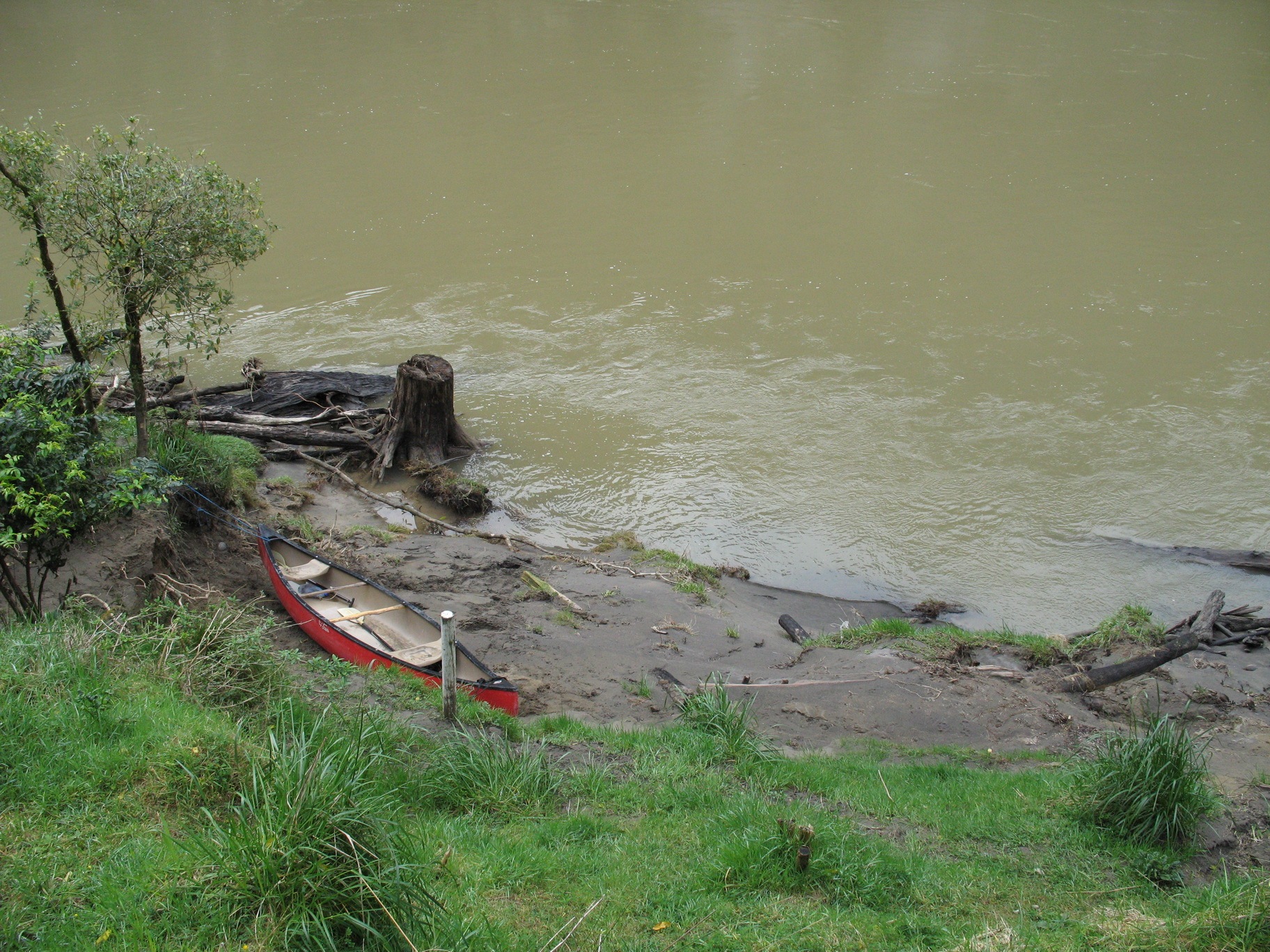
We saw a sign saying “Welcome to John Coull Hut”, but there was no landing zone. There was just a steep grassy hill, but not as bad as before when we got the canoe out. We manoeuvred the canoe to the side and out of the main current. Fem carefully got out of the canoe, climbed up the hill, and saw a path. I urged her to follow it and see where the landing zone is. She follows it and sees that it is just around the corner. So rather than get back into the canoe, we walked along the steep shoreline, dragging the canoe by the rope at the front. I was shocked when I saw the landing zone. If you did not know it was there, you WOULD have missed it. There was a strong current right in front of it, only about 10 metres wide. It was also directly behind a steep turn. The shore was a small section of dirt and mud at a 45-degree angle. I took the rope connected to the canoe and dragged it over. I got another shock when I stepped on the dirt near the water’s edge and sank down almost to my knee.
We couldn’t drag the canoe up the steep slope without getting the barrels out first to lighten the weight. Fem untied them and passed them up to me. Then we were able to get the canoe up higher, and we then tied off both ends to nearby trees and stumps.
We were safe! We took the 5 barrels up to the 100-metre path to the hut. This process took ages as we were both exhausted.
Later, based on the timestamps of the photos we took, we estimated we’d been in the water for 3.5 hours.
In hindsight, I was seriously worried about what would have happened if I hadn’t got the canoe over the last time and Fem hadn’t been successful in getting us to land. There would have been a good chance we would have gone right past the hut, and given how cold we both were, I don’t think we could have held on to the canoe much longer.
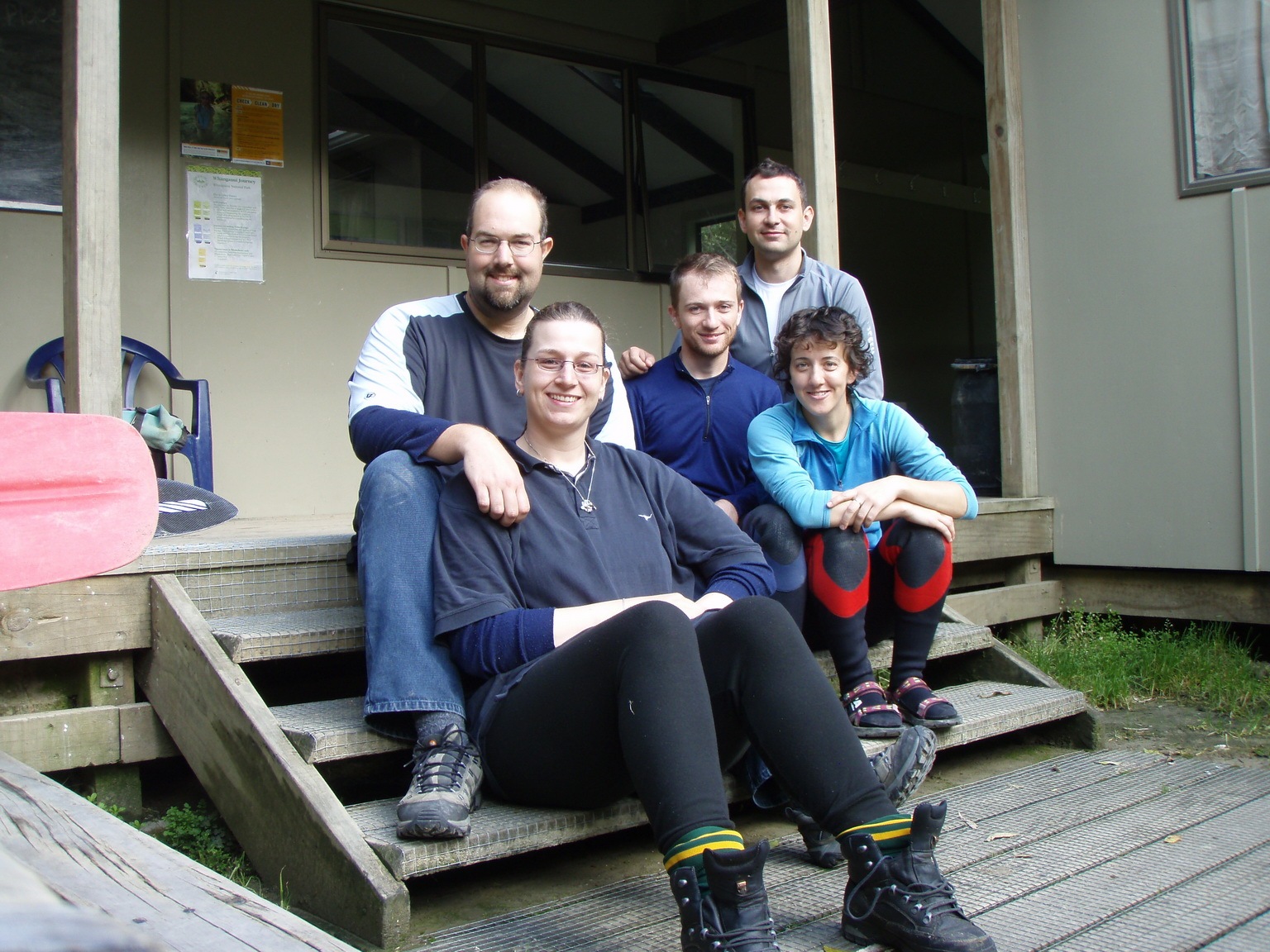
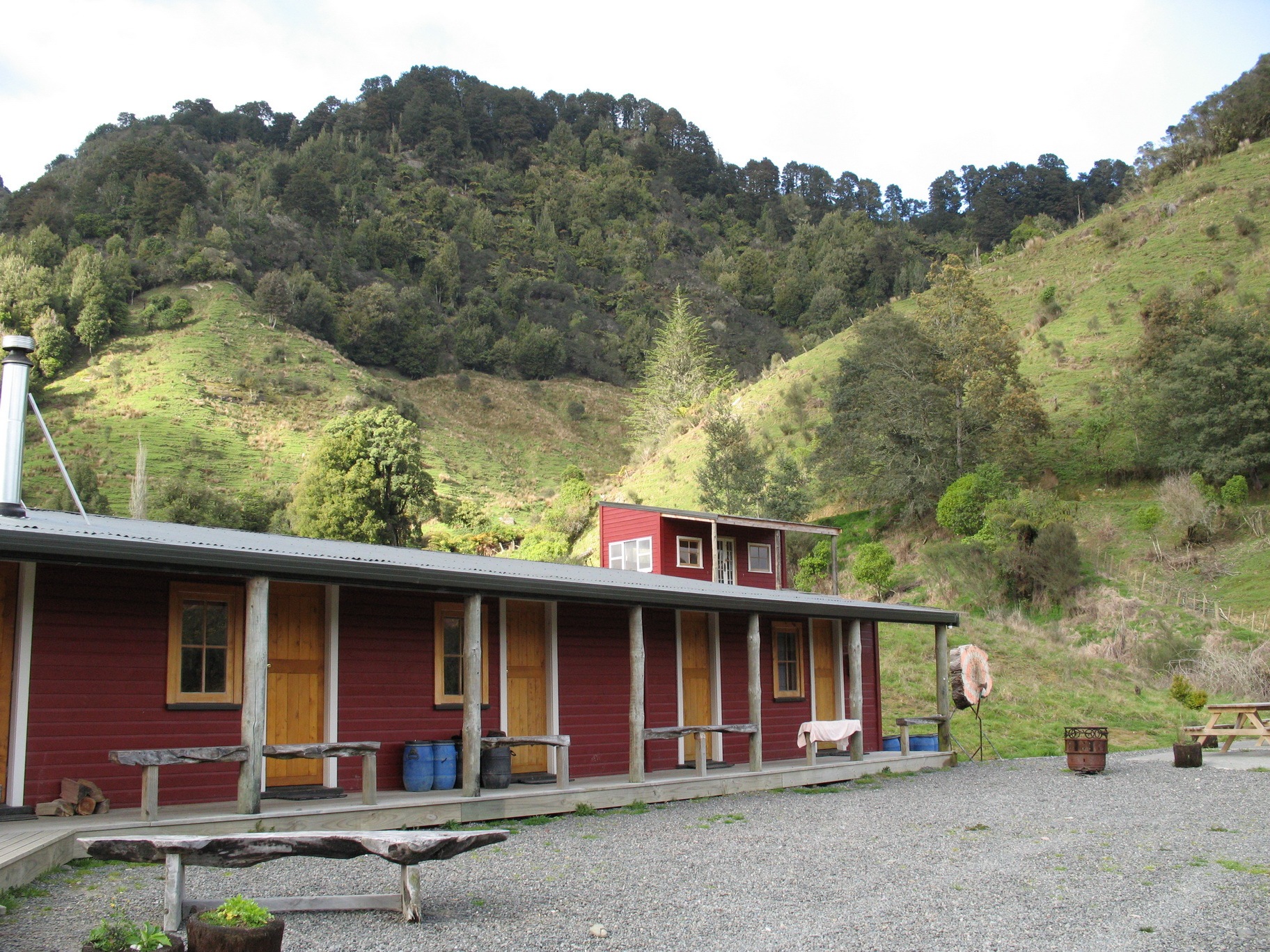
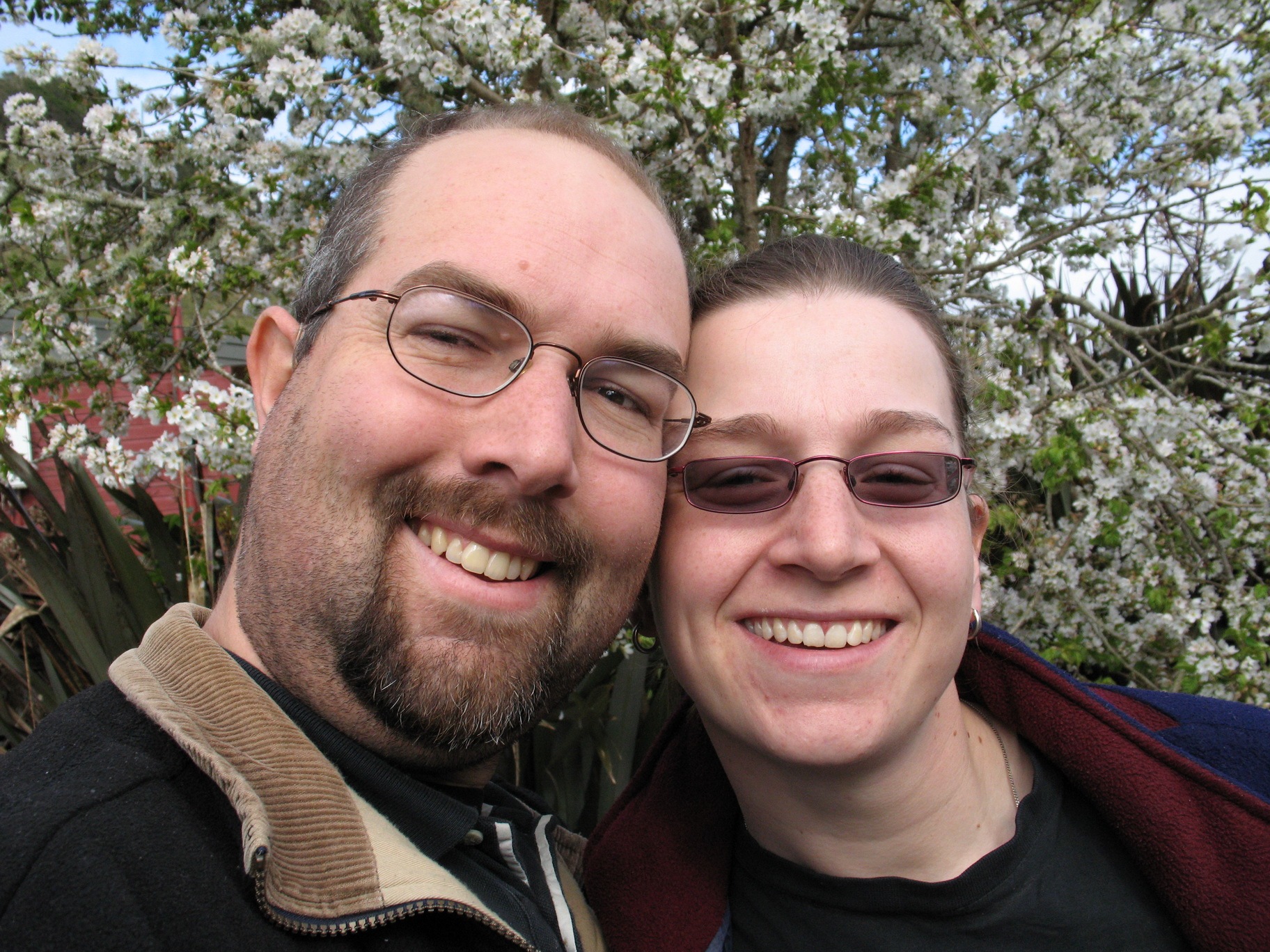
The photos below show Fem and me just when we arrived at the hut. The middle image is our landing zone at the John Coull hut.
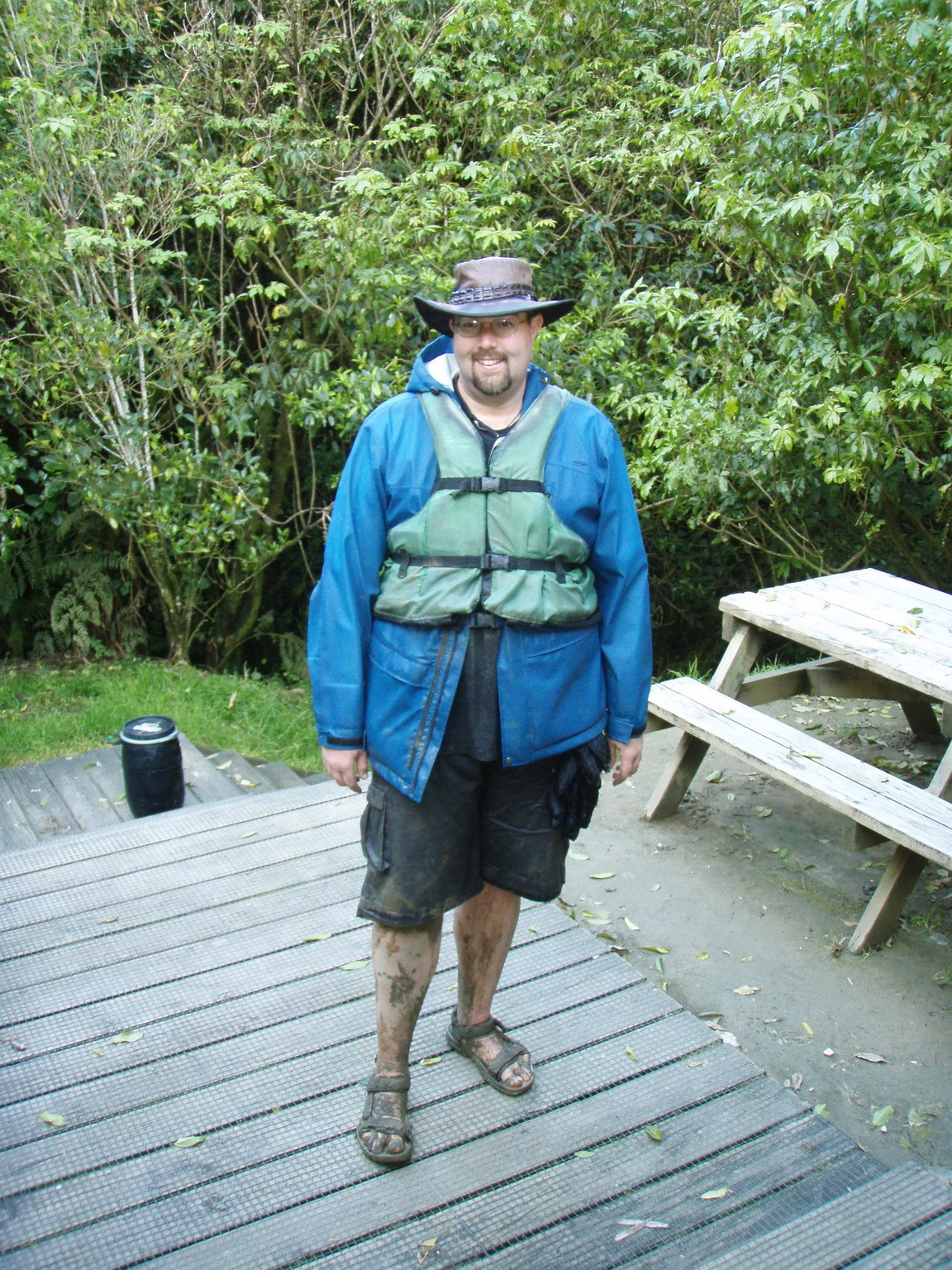
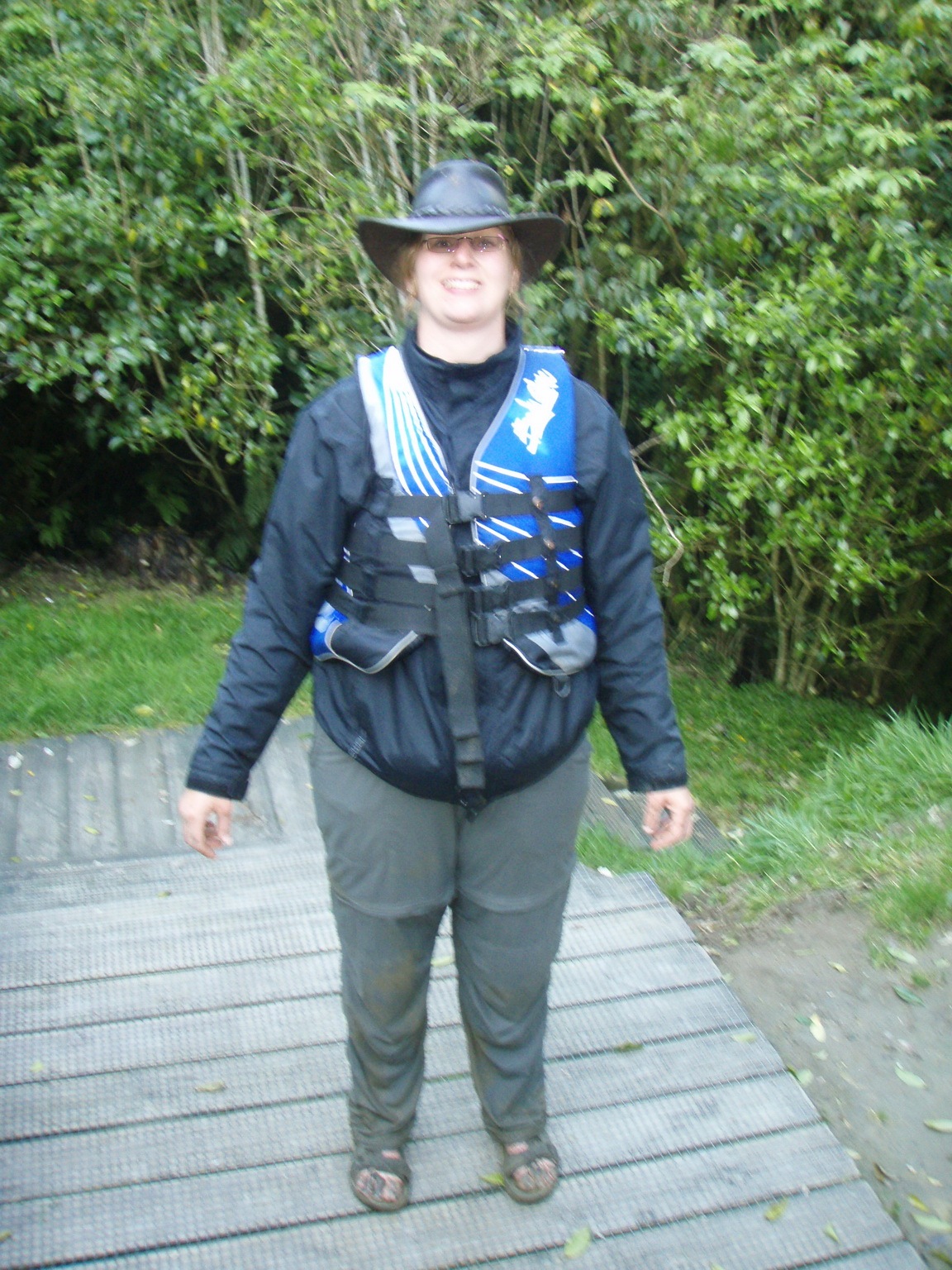
We were the only ones there. We opened the barrels, and to our shock, 3 of the 5 barrels had water leakage. The barrel that I had cut loose contained my sleeping bag. At this point, I didn’t care too much about the lost bag. I was glad we were out of the water and at the hut. If I had a choice of which barrel to “sacrifice”, that would have been it. The two barrels that had remained dry contained our shoes, the food, my hearing aids, camera, wallet and matches. I was so happy my hearing aids were ok!
Almost all of Fem’s dry clothes were saturated. Her sleeping bag was damp in spots. My clothes were damp or had minor wet sections, and the utility bag was wet. Fem’s headlight torch was damaged and didn’t work.
The wood fire in the hut had no matches provided. Luckily, the ones we had were in one of the dry barrels, so we used them to try and start a fire. After a frustrating hour of attempts, we could not get the damp wood to keep burning. We then gave up and had dinner.
With most of Fem’s clothes wet, we had to share what little dry clothes we had between us. I ended up with just two T-shirts and a pair of underpants, and Fem was the same. After being in the water for that long, we needed to get warm.
We used the yellow plastic bag liners for our clothes as makeshift sleeping bags and had just Fem’s damp sleeping bag over our bodies — anything to try and warm ourselves. We had an early night and tried to get to sleep. I can’t stop shivering as I cannot get warm. My exposed legs are cold to the touch and shaking uncontrollably. Even with a second hut mattress over me to try to keep the warmth in, it doesn’t help much.
After a while, Fem has had enough and tries to start the fire again while I try to warm up. After another hour, she is successful, and the fire is going! We move our hut mattresses out in front of the fire and spend a few hours slowly warming up. My legs finally get warm, and I stop shivering.
We no longer want to continue this canoe trip. We cannot risk another spill in the water with the strong current. Our confidence in the watertight barrels is gone. So we decide to stay at the hut until we are rescued.
Day 2 – The Waiting
We wake up to find the fire out. I spend another hour by myself at first, then Fem persists and gets it going again. We resolve not to let it die out again, as we are running out of matches.
Fem sleeps mid-afternoon while I read some of the magazines left in the hut. Shortly after, two pig hunters enter the hut. They seem surprised to see us. We share our story of the previous day to their shock and amazement. They came to the hut by jet boat but had to pick up other people, so they couldn’t take us back with them. But they assured us they would pass the message to our canoe company, so we should be picked up sometime the following day. This is very reassuring to know.
About two hours later, three Israeli Russians entered the hut. Michael, Kesnia and Boris. They kayaked our first leg of the river that day. Again, they were shocked to hear our story. They were experienced sea-kayakers, and on the day we set off, other canoeing companies had denied them entry to the river on Sunday. They were only allowed on the river that day because of their previous kayaking experience.
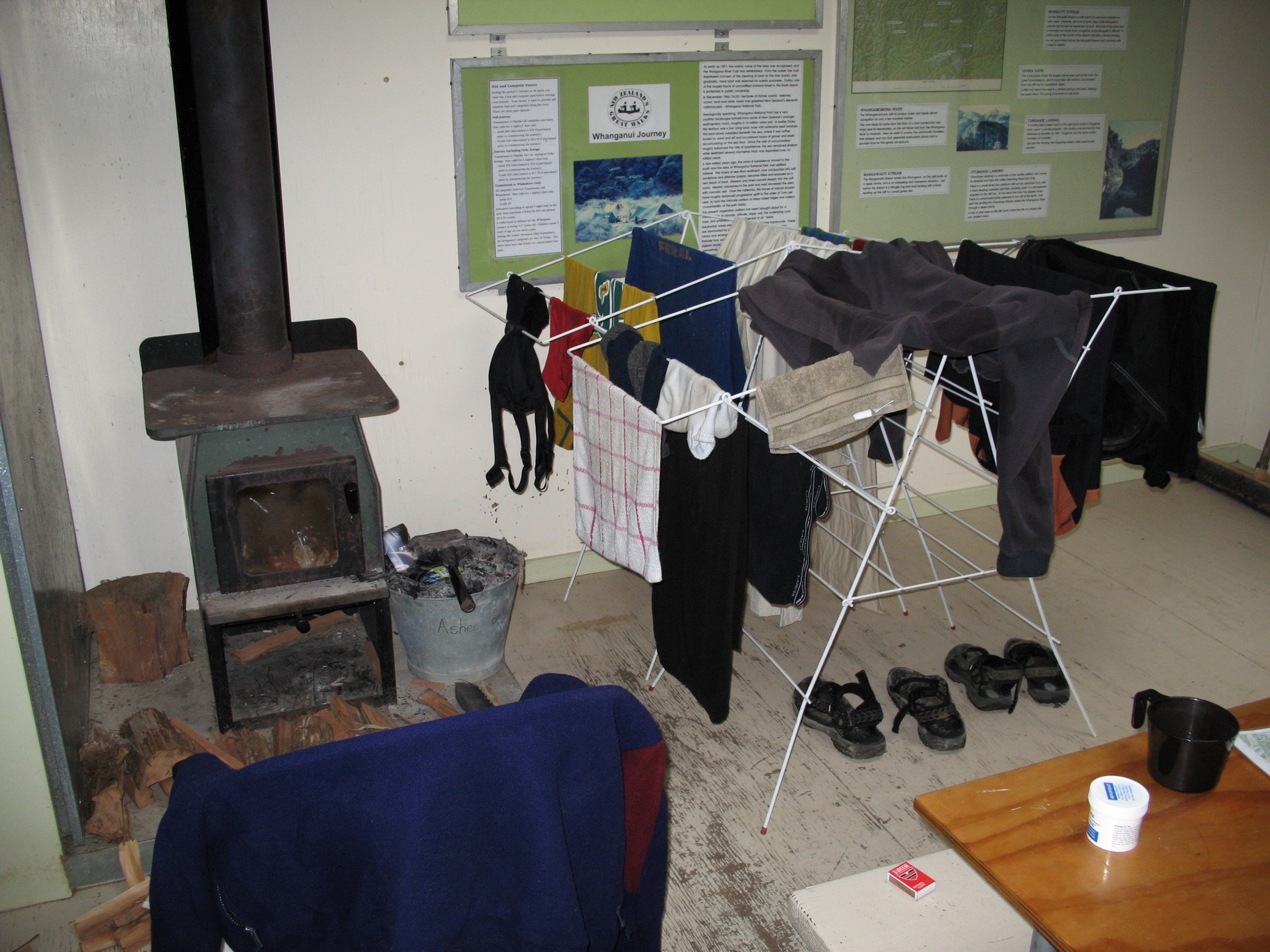
By late afternoon, most of our clothes had been flame-dried. So we were much warmer than the night before. We spent the rest of the day resting, chatting with the new arrivals, playing travel Scrabble (wet but functional), reading magazines, or keeping the fire going.
That night they shared a meal with us. They offered us cheese, fruit, and nuts with straight rum. We offered some of our chocolate in exchange, and we all had a good time that night.
Since the fire had been going all day and into the evening, the hut itself was very warm. I didn’t need a sleeping bag and was warm enough to lie fully clothed on the mattress. However, during the night, we had to wake up and add more big logs to the fire to keep it from dying out completely. Fem was mostly awake through the night, and she had to nudge me to check the fire sometimes.
Day 3 – The Rescue
The two pig hunters had returned the previous night and were camping in swags outside in the camping section. They came into the hut in the morning and offered Fem and me some bacon with our breakfast. They assured us they would contact the canoe company as soon as they returned to their main base, which would have been about 2 pm that afternoon. They apologised for not being able to take us with them, but we clearly understood the situation. We were just very grateful they could get the message out that day!
We said farewell to the Israelis at about 10:30 am. Then it was a slow wait until we were rescued. Did the hunters get the message out in time? Will we be picked up today or tomorrow? I told Fem it would be too dark if they weren’t here by 5 pm, and we wouldn’t be rescued until the following day.
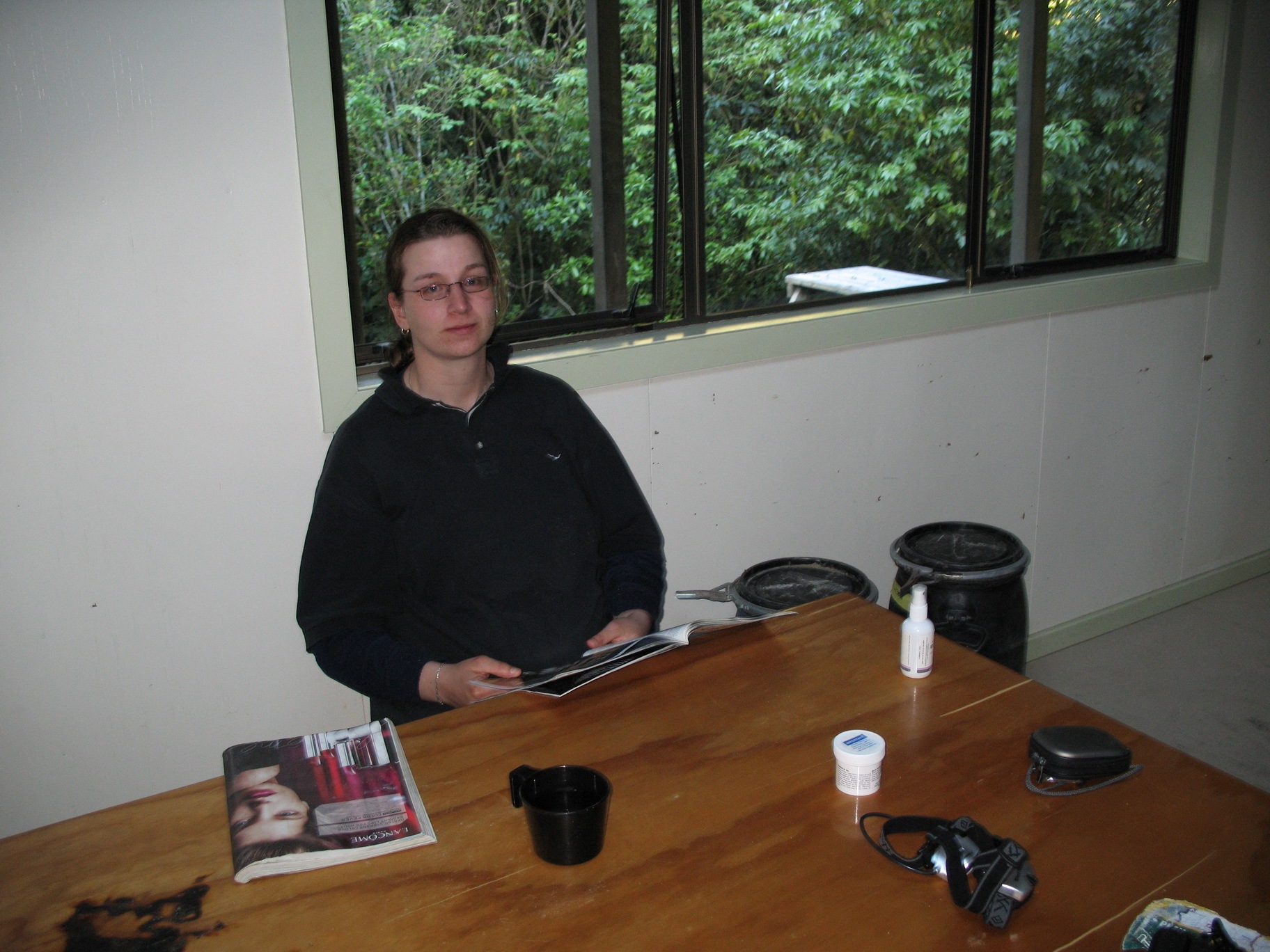
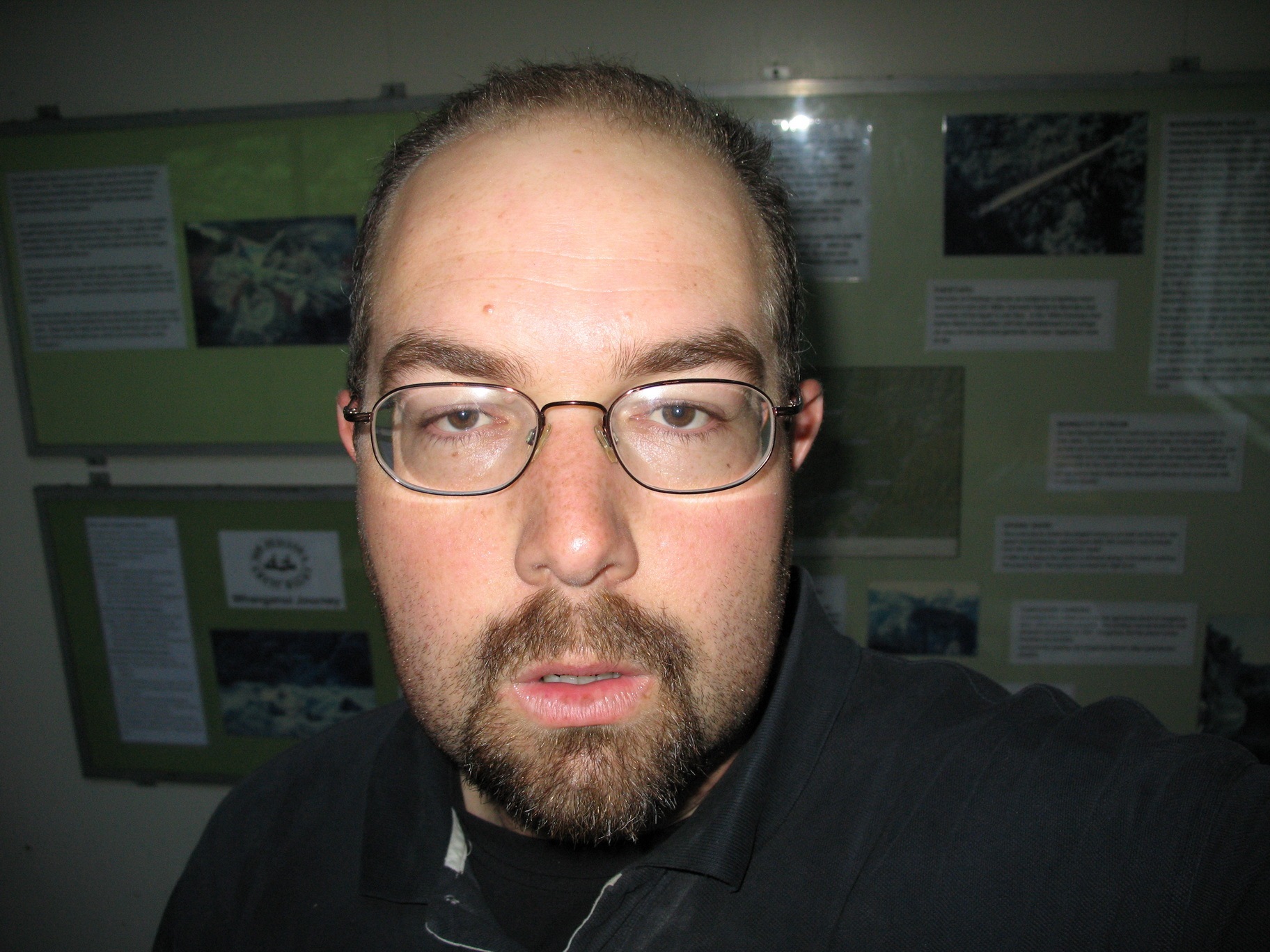
The above photos were taken at 4 pm to show us just waiting and waiting and waiting.
At 4:30 pm, after a painfully slow afternoon, Fem hears the roar of a jetboat engine, and we rush down to the landing area. There is a small jetboat waiting for us. He motions for us to grab our stuff quickly. We run back to the hut, grab our already-packed barrels, and take them down.
“What about the canoe?” I yell out to the driver from the shoreline.
The driver, who was out of audio range for me, gave me the two-finger salute (meant for the canoe), then smiled and waved his hand, “bye-bye”.
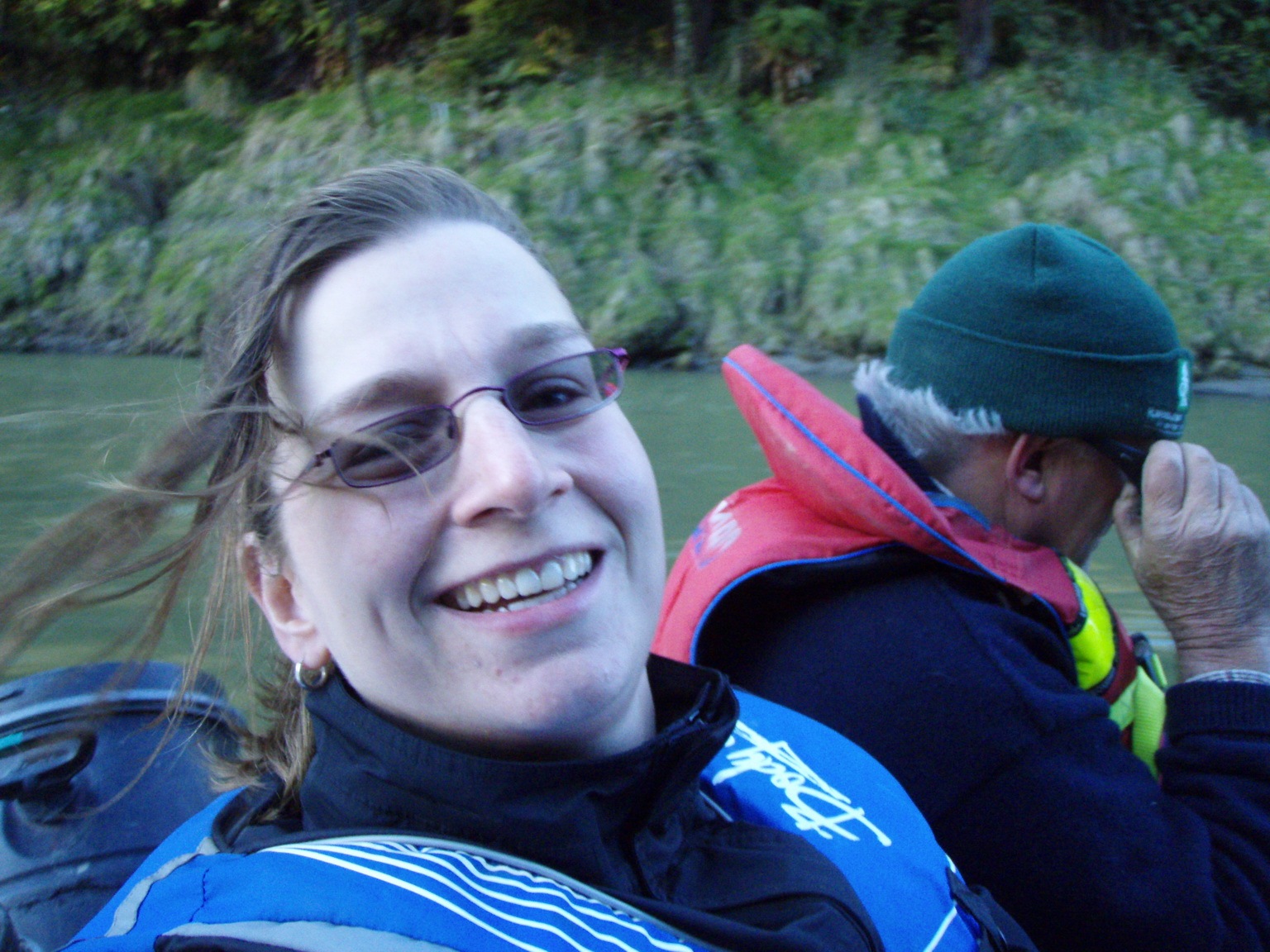
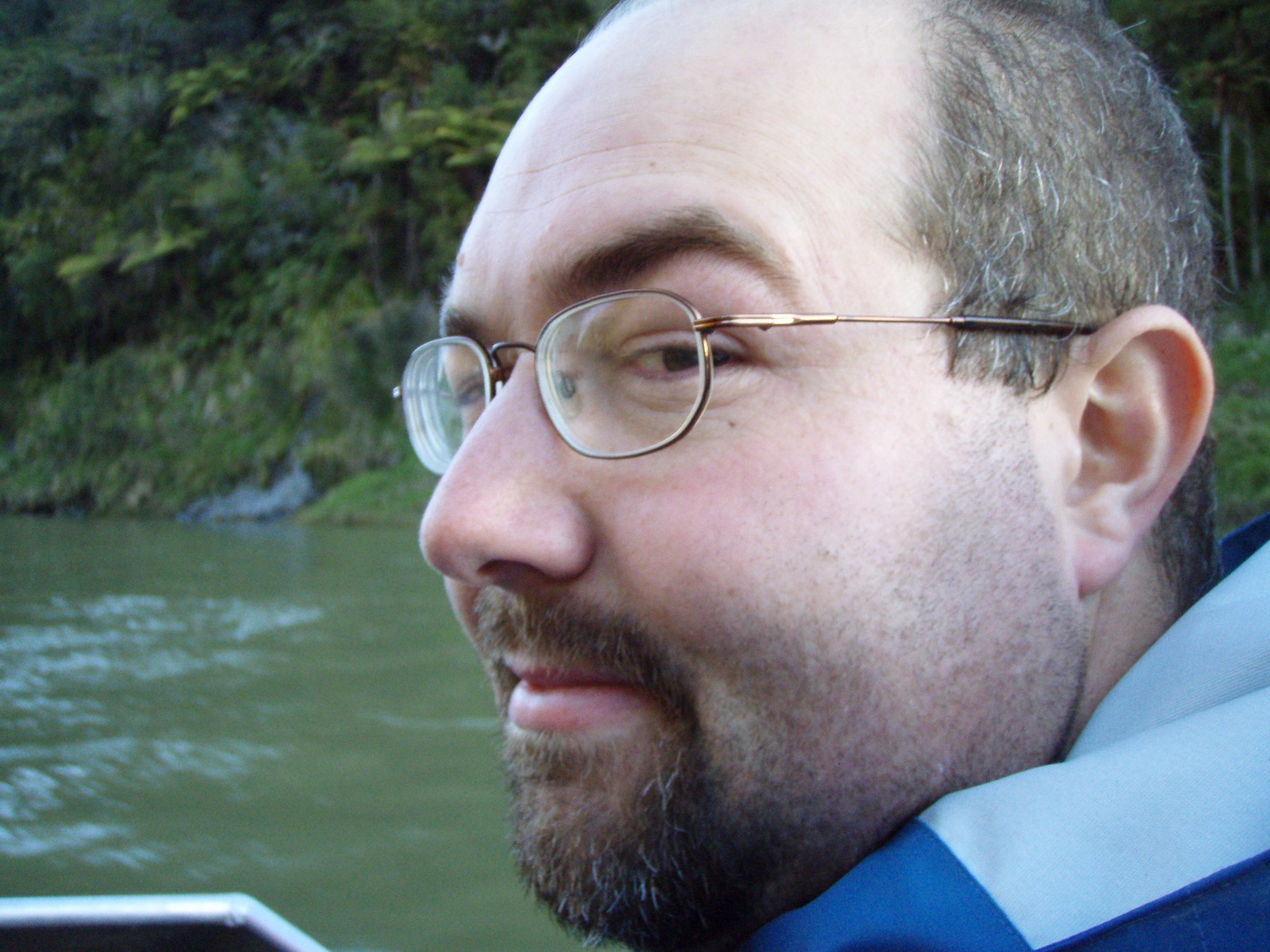
We jumped in and off we went back the way we came. The river had dropped another 1.5 metres since the Sunday when we started. I could barely recognise it. We could not even spot where we had been able to get out of the water and sort out the canoe on the way down. The current had also dropped off dramatically. Fem was able to get some shots from the jetboat. Photo 3, with the jetboat’s wake clearly visible, shows where we toppled out.
The left side of photo 4 is a rough idea of the landing area where we first got the canoe out of the water. As you can see, it’s mainly a steep grassy cliff with a small section sticking out at the end.
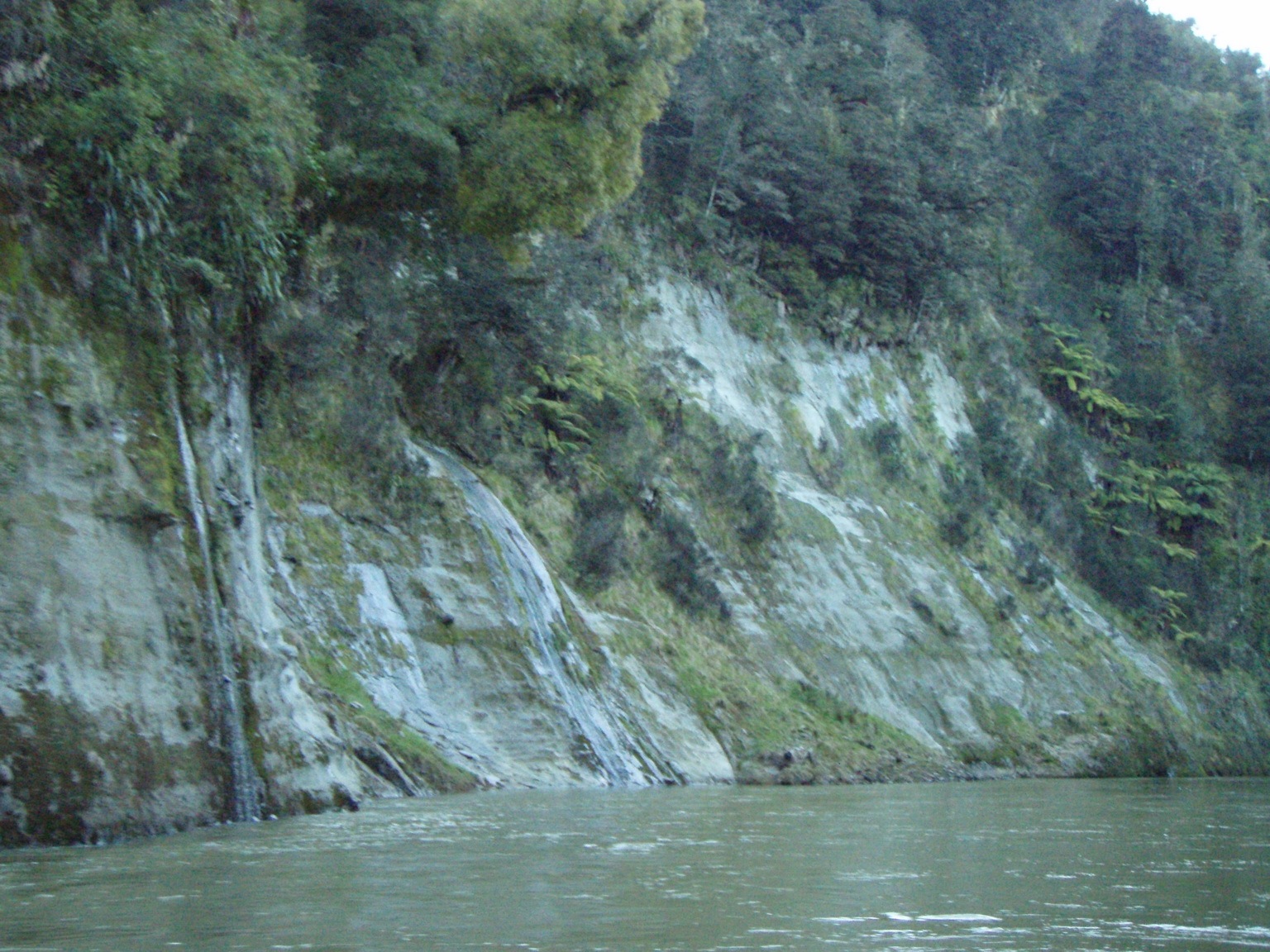
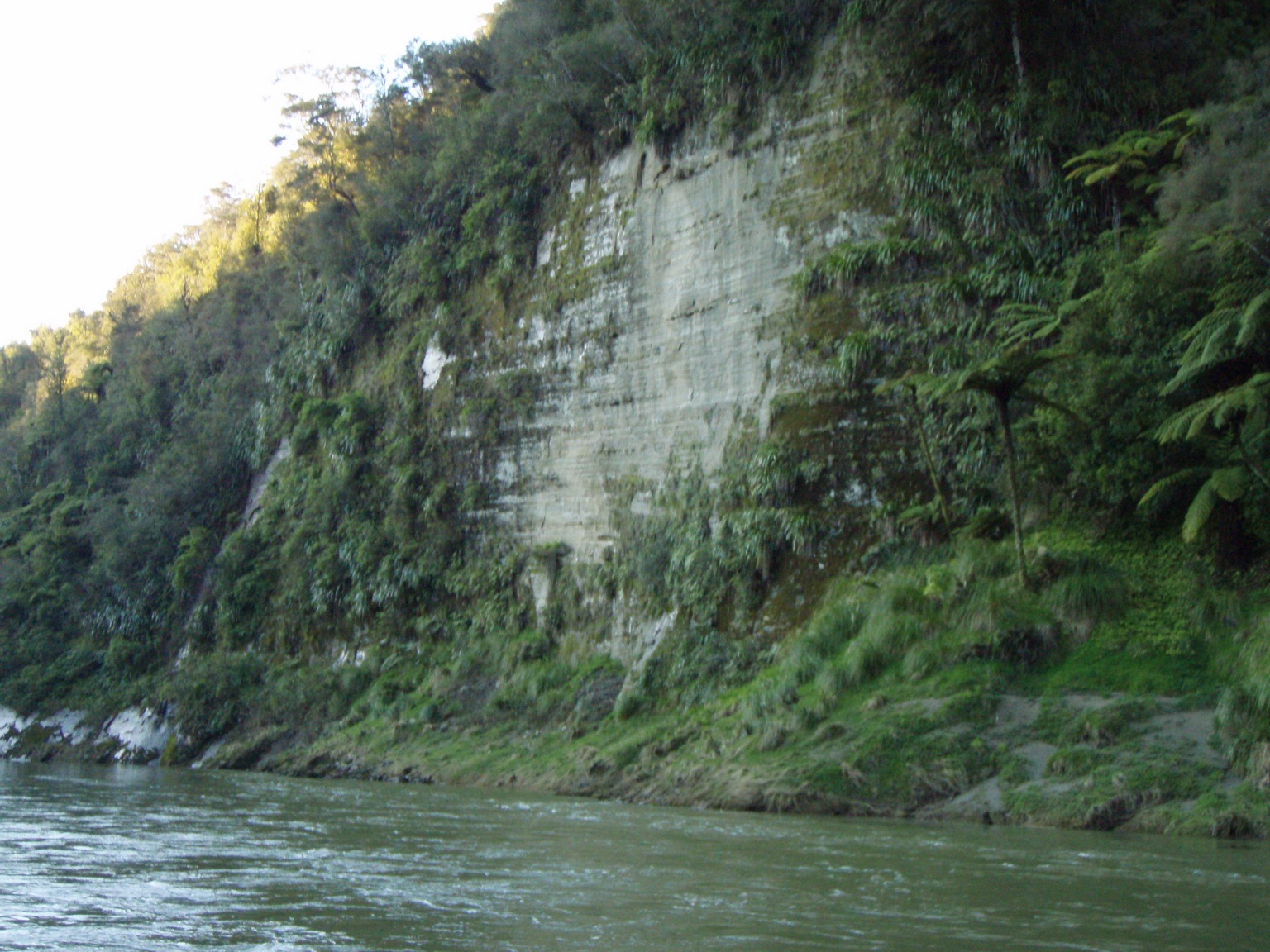
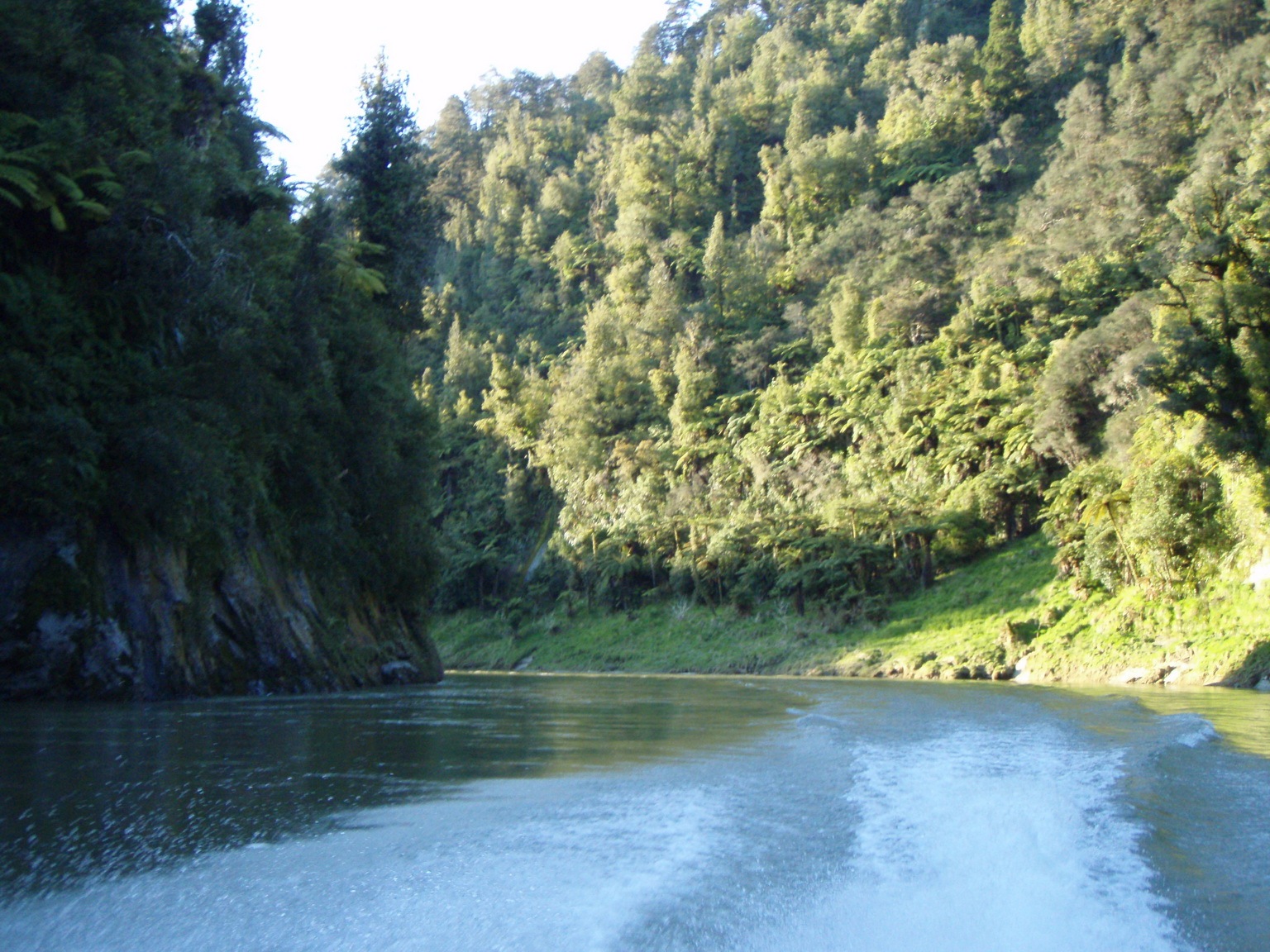
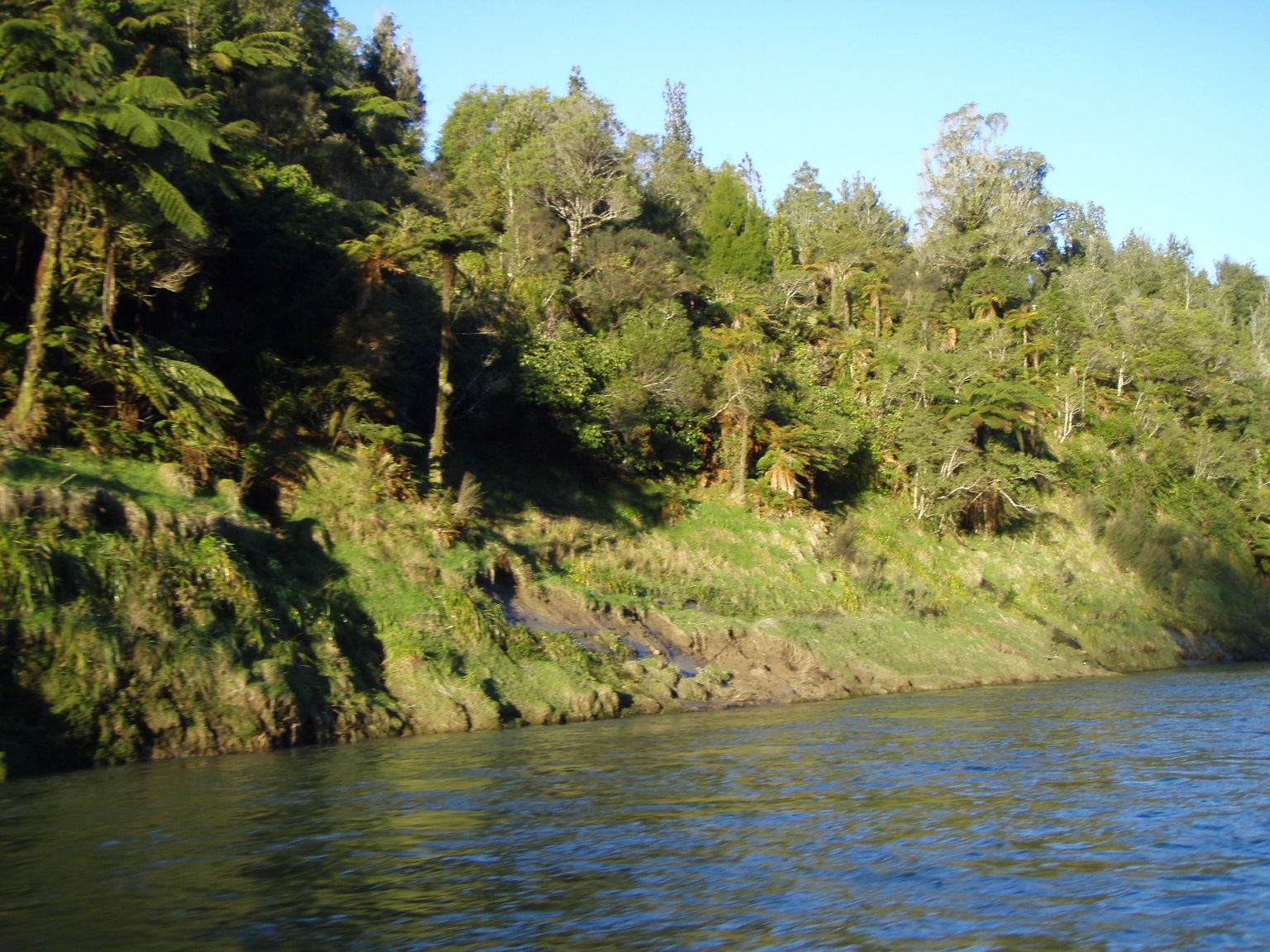
There were large sections of the river with no current at all. It was like significant sections were just a pond, with some sections having some current. We were annoyed. This was how the river should have been for our trip.
We got back to Whakahoro and got off the river. It was late in the evening, and the assistant’s car had a flat battery, so we could not get back to our car. They offered to put us up in a nearby lodge for the night, which we accepted. Everyone was so helpful and friendly to us. They were all shocked to hear our story. After having a tasty meal of deer heart, liver and kidneys from a hunter’s first kill, we settled in for a good night’s sleep.
Day 4 – Epilogue
After a good breakfast, the canoe company owner turned up and drove us back to our car. He was humble and apologetic and said, “Well, in hindsight, I probably should not have let you on the river”.
When we first arrived at the hut, we were rather angry with the owner and his abysmal decision to let inexperienced canoeists on what ended up being a swollen river. But by the third day, we were grateful to have survived it and just wanted to move on.
We had not paid for the trip yet, and since he didn’t bring it up on the car ride back, I didn’t push it. Besides, we needed that money to get a new sleeping bag for me and a head torch for Fem.
We got back to our car and then left. This concludes our Whanganui Canoe Trip. If you have any questions, please let me know.
- (Blog post co-edited by Femke in 2008 and by Grammarly in 2026)

Comments